The Challenge
The WGMC ED was experiencing high arrival to provider times and low patient satisfaction scores.
Located 40 minutes from the coast in Kinston, N.C., UNC Lenoir Health Care is a not-for-profit hospital offering general medicine and advanced, specialized care including cardiology, pulmonology, oncology, radiology and urology to the local and surrounding communities.
UNC Lenoir treats approximately 44,500 patients per year in the 17-bed emergency department (ED). The ED averages a low to mid-range patient acuity level and utilizes a systematic approach to daily physician and APC coverage.

Hospital Beds:
216
ED Beds:
17
Annual Volume:
45,000
Low-mid acuity
Daily Physician Coverage:
24-33-hours
Practice Size:
6 physicians and 6 APCs
The WGMC ED was experiencing high arrival to provider times and low patient satisfaction scores.
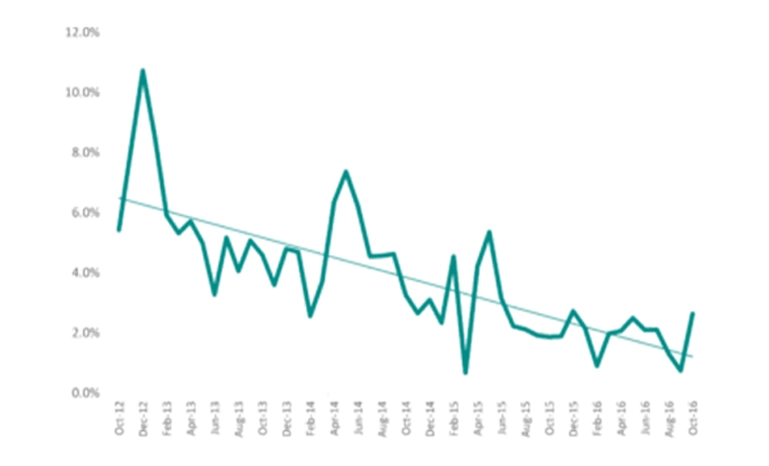
Several key strategies were implemented to improve department operations and in return decrease LWBS rates.
 Establish dedicated medical director and core clinician group
Utilize systematic, efficiency-based scheduling
Simplify EHR work-flow, tools and order processes
Align ED-nursing and ED-hospital teams
Implement regular, open communication and feedback
Establish dedicated medical director and core clinician group
Utilize systematic, efficiency-based scheduling
Simplify EHR work-flow, tools and order processes
Align ED-nursing and ED-hospital teams
Implement regular, open communication and feedback
UNC Lenoir decreased LWBS over a five-year period from 5.7% in April 2013 to 0.2% in April 2018.