Brianna Watson Connects Emergency Medicine and Public Health
The 2026 ApolloMD scholarship winner plans to combine acute care, environmental research, and community service.
The 2026 ApolloMD scholarship winner plans to combine acute care, environmental research, and community service.
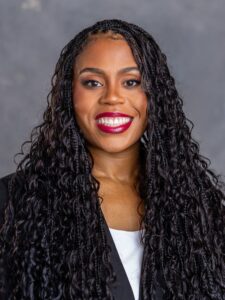
By the time Brianna Watson graduated from high school, she had volunteered for 500 hours at the hospital where she was born.
She joined the hospital’s teen volunteer program as a freshman and began spending weekends there. She worked in maternity care and the neonatal intensive care unit, sometimes taking eight-hour shifts. Later, she joined the junior volunteer board and helped oversee other students.
“I absolutely loved being at the hospital,” Watson says.
The experience confirmed her interest in caring for people. Medicine also offered the chance to understand why people become sick and how to help change what happens next.
“I always wanted to know why,” she says.
Watson is now a fourth-year student at Howard University College of Medicine in Washington, D.C. ApolloMD recently named her the winner of its ninth annual Emergency Medicine Scholarship. The $5,000 award will help cover her Step 2 exam, away rotations, and other expenses as she finishes medical school and prepares for residency.
Watson began her clinical rotations without knowing which specialty she would choose.
During her obstetrics and gynecology rotation, she found herself drawn to emergency cesarean deliveries, cases involving eclampsia, and other urgent situations. She noticed the same pattern during trauma surgery.
She began to ask whether those specialties interested her or whether she felt most engaged during an emergency. When she completed an emergency medicine rotation, the answer became clear.
Watson valued “being able to be calm during chaos and really being there for someone on the worst day that they have,” she says.
Emergency medicine allowed her to perform procedures, solve different kinds of medical problems, and care for people from all backgrounds.
Her academic background also shaped that interest. She grew up in Chino Hills, California, and studied sociology and molecular environmental biology at the University of California, Berkeley. Sociology deepened her interest in health disparities, while environmental biology prepared her for the research she plans to pursue.
At an emergency medicine conference in Atlanta, Watson found a professional community that felt like home. “These are my people,” she remembers thinking.
“I was really happy that I found my fit because I wasn’t sure what it was for a long time,” she says.
ApolloMD asked scholarship applicants how technology will change emergency medicine over the next decade.
Watson’s essay acknowledged that artificial intelligence could help physicians identify diagnoses, reduce paperwork, improve patient flow, and recognize when someone’s condition is worsening. She also examined the environmental effects of the infrastructure that powers AI.
Data centers use large amounts of electricity and water. As demand for AI grows, Watson wrote, that infrastructure could contribute to environmental exposures that affect health and eventually bring more people to emergency departments.
“I think AI is great, but I think everything is great in moderation, just like sugar,” Watson says.
She says healthcare leaders should weigh those potential costs along with the benefits.
“With AI, we have to be judicious,” she says.
After graduating in May 2027, Watson plans to spend nine months conducting research in Chiang Mai, Thailand.
As a 2026 Fulbright-Fogarty Scholar, she will study how seasonal air pollution affects blood vessel function and inflammation in older adults with diabetes.
Her research will focus on fine particulate matter, or PM2.5, a form of air pollution made up of particles 2.5 micrometers in diameter or smaller. These particles can travel deep into the lungs, and some may enter the bloodstream.
Chiang Mai experiences periods of higher and lower air pollution because of seasonal agricultural burning. Watson plans to compare blood vessel function and markers of inflammation during those periods.
She says she hopes the findings can help hospitals and public health agencies prepare for other periods of poor air quality, including wildfire smoke. Emergency departments may see more asthma attacks, breathing problems, and complications of chronic conditions during those events.
Watson has already seen how air quality can affect emergency care. During a rotation at a children’s hospital in Washington, she saw children seek treatment for asthma symptoms during a period of elevated PM2.5. Their usual asthma routines were not controlling their symptoms, she says.
“My goal is not only to study disease after it occurs,” Watson wrote in her essay, “but to identify opportunities for prevention before patients require emergency care.”
Watson sees emergency medicine as a front line of public health.
She says many people no longer have a consistent relationship with a primary care physician. Some wait until a medical problem becomes severe before seeking care in an emergency department.
Emergency physicians see the effects of those gaps, along with chronic disease, environmental exposures, and other problems affecting their communities. Watson says those experiences can give them an important voice in public health and policy.
The scholarship arrives as Watson is planning for her final year of medical school, with expenses for board exams, away rotations in several parts of the country, and an international move before residency.
“I was honestly so shocked and grateful,” she says. “It was such an amazing opportunity.”
The award recognizes a future physician who wants to understand what happens both inside and outside the emergency department. Watson plans to treat urgent illnesses, study the conditions that contribute to them, and help communities prepare before those illnesses become emergencies.
ApolloMD Scholarship funds are designed to help the recipient defray the costs of medical education. Applications open each year in mid-March and must be completed by June 15.